
How Much Water Do You Really Need? A Practical Guide to Daily Hydration
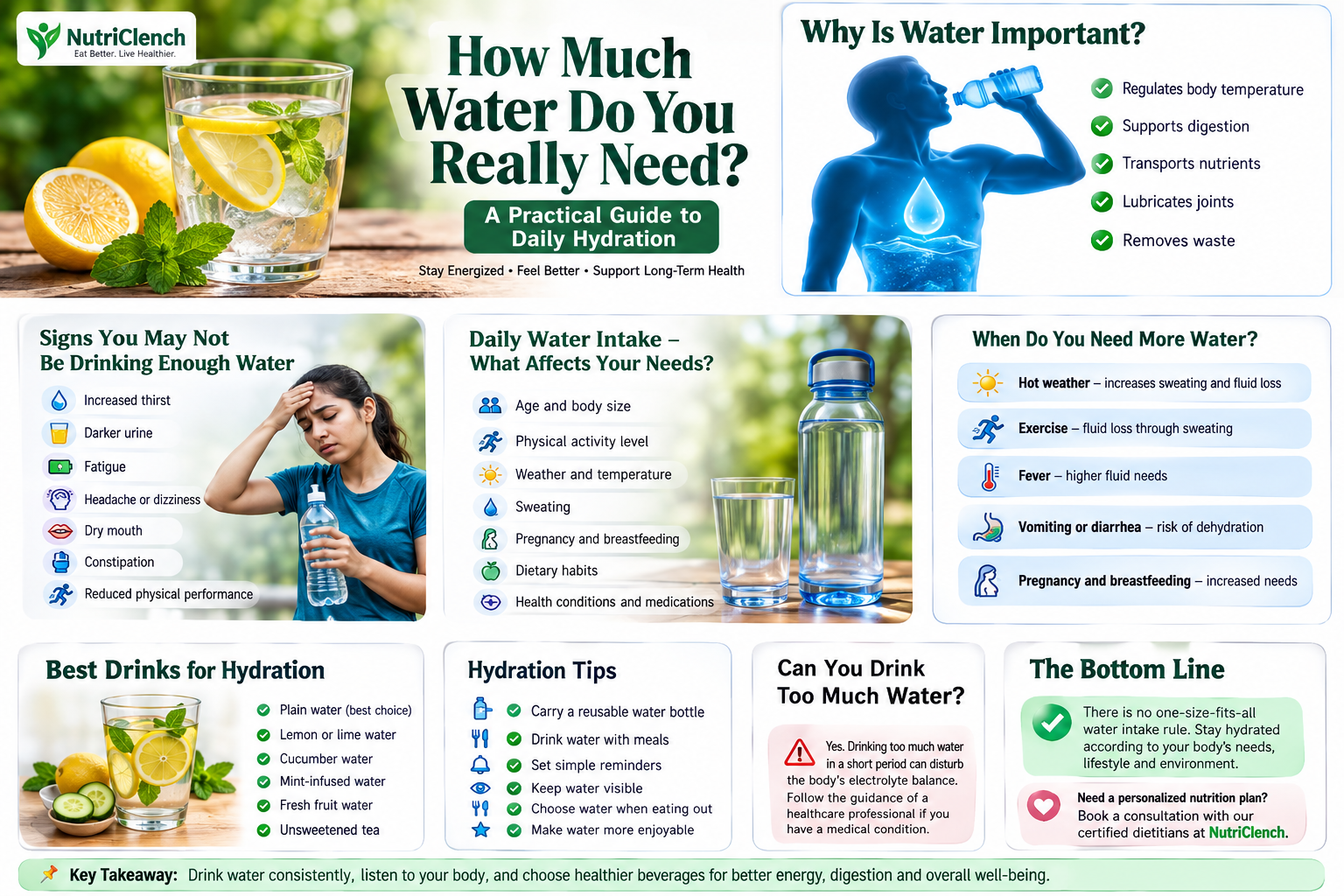
How much water should you drink every day? Learn how hydration needs vary, common signs of dehydration, the best ways to stay hydrated, and when you may need personalized nutrition guidance.
How Much Water Do You Really Need? A Practical Guide to Daily Hydration
Water is one of the simplest parts of a healthy lifestyle, yet many people are unsure about how much water they actually need each day.
You may have heard the common advice to “drink eight glasses of water a day.” But is that the right amount for everyone?
Not necessarily.
Your daily hydration needs can change depending on your age, body size, activity level, climate, diet, pregnancy or breastfeeding status, and certain health conditions. People who exercise regularly or live in hot and humid environments may need more fluids than someone who is mostly sedentary in a cooler environment.
The goal is not to follow one fixed number blindly. The goal is to maintain good hydration throughout the day while paying attention to your body's needs.
In this guide, we’ll look at daily water intake, hydration, signs of dehydration, practical hydration tips, and when personalized nutrition advice may be helpful.
Why Is Water Important for Your Body?
Water plays an important role in many normal body functions.
Your body uses water to help regulate temperature, support digestion, transport nutrients, lubricate joints, and remove waste through processes such as urination and sweating.
When you don't get enough fluids, dehydration can affect how you feel and function. Depending on the severity, dehydration may be associated with symptoms such as thirst, fatigue, headache, dizziness, constipation, or difficulty concentrating.
Staying adequately hydrated is therefore an important part of a healthy lifestyle.
How Much Water Should You Drink Every Day?
There is no single amount of water that is perfect for every person.
Your fluid needs depend on several factors, including:
Age and body size
Physical activity
Weather and temperature
Sweating
Pregnancy and breastfeeding
Dietary habits
Fever, vomiting, or diarrhea
Certain medical conditions and medications
Water from food and other beverages can also contribute to your overall fluid intake. Fruits and vegetables with high water content, for example, can contribute to hydration.
Instead of focusing only on a fixed number of glasses, consider your daily routine, activity level, climate, and individual health needs.
Does Everyone Need 8 Glasses of Water a Day?
The “eight glasses a day” rule is easy to remember, but it should not be treated as a universal medical prescription.
Some people may need more fluids, while others may need less. Your needs can change from one day to another.
For example, you may need more fluids on a hot summer day, after intense exercise, or when you are losing fluids through sweating.
This is why hydration should be personalized rather than based on a single number for everyone.
7 Signs You May Not Be Drinking Enough Water
Your body can give you several signals when fluid intake is inadequate.
1. Increased Thirst
Feeling thirsty is one of the most obvious signals that your body needs fluids.
2. Darker Urine
Urine color can provide a useful general indication of hydration, although it can also be affected by foods, supplements, medications, and other factors.
3. Fatigue
Not drinking enough fluids may contribute to feeling tired or less energetic.
4. Headache or Dizziness
Dehydration can sometimes be associated with headaches or dizziness.
5. Dry Mouth
A dry mouth or sticky feeling in the mouth can occur when you need more fluids.
6. Constipation
Adequate fluid intake is one component of maintaining normal bowel function.
7. Reduced Physical Performance
When you lose significant amounts of fluid through sweating, maintaining hydration becomes particularly important during physical activity.
If you regularly experience concerning symptoms, however, don't assume that dehydration is the only possible cause. Speak with an appropriate healthcare professional.
When Do You Need More Water?
Your fluid requirements can increase in situations where you lose more water than usual.
Hot Weather
Heat can increase sweating and fluid loss. If you live in a hot or humid environment, you may need to pay extra attention to hydration.
Exercise
Physical activity increases fluid loss through sweating. Drinking fluids before, during, and after exercise can help support hydration.
Fever
A fever can increase fluid requirements.
Vomiting or Diarrhea
Vomiting and diarrhea can cause significant fluid loss. In these situations, appropriate rehydration is important, and medical advice may be necessary depending on the severity.
Pregnancy and Breastfeeding
Fluid requirements can change during pregnancy and breastfeeding. Individual needs should be discussed with a qualified healthcare professional or dietitian.
What Is the Best Drink for Hydration?
For most everyday situations, plain water is a simple and calorie-free choice.
Water can also be a useful alternative to sugar-sweetened beverages. Replacing sugary drinks with water can reduce added sugar and calorie intake.
If you find plain water boring, you can make it more enjoyable by adding natural flavors such as:
Lemon or lime
Cucumber
Mint
Fresh fruit
Unsweetened tea and other low-calorie beverages can also contribute to fluid intake.
However, your ideal beverage choices can depend on your overall diet, health goals, and medical needs.
Hydration and Weight Management
Water itself contains no calories, making it a useful replacement for sugary drinks.
Regularly choosing water instead of sugar-sweetened beverages can help reduce the amount of added sugar and calories consumed from drinks.
However, drinking excessive amounts of water is not a shortcut for weight loss.
Healthy weight management depends on your overall eating pattern, physical activity, sleep, lifestyle, and individual health factors.
A personalized nutrition plan can be much more effective than relying on a single habit or “quick fix.”
Simple Ways to Drink More Water Every Day
If you often forget to drink water, try these practical strategies:
Carry a Reusable Water Bottle
Keeping water within reach makes it easier to drink throughout the day.
Drink Water With Meals
Make water a regular part of breakfast, lunch, and dinner.
Set Simple Reminders
If you spend most of your day working at a desk, occasional reminders can help you remember to drink.
Keep Water Visible
Place a bottle or glass of water where you can easily see it.
Choose Water When Eating Out
Instead of automatically ordering a sugary drink, consider water or another low-sugar option.
Make Water More Enjoyable
Add lemon, cucumber, mint, or fresh fruit if you prefer flavored drinks.
The best hydration habit is one that you can maintain consistently.
Can You Drink Too Much Water?
Yes. More water is not always better.
Drinking extremely large amounts of water in a short period can be harmful because it can disrupt the body's normal electrolyte balance.
People with certain medical conditions, including some kidney, heart, or liver conditions, may also have specific fluid requirements or restrictions.
If you have a medical condition or have been advised to restrict fluids, follow your healthcare professional's recommendations rather than following general hydration advice.
Frequently Asked Questions About Water Intake
How much water should I drink in a day?
There is no single amount that applies to everyone. Your needs depend on factors such as body size, activity, climate, diet, and health status.
Is drinking water good for weight loss?
Water contains no calories and can replace sugary beverages, which may help reduce calorie intake. However, water alone does not cause sustainable weight loss.
Is clear urine always a sign of perfect hydration?
Not necessarily. Urine color can provide general information, but it can be influenced by several factors. Hydration should be considered alongside your overall health and fluid intake.
Should I drink more water when exercising?
Physical activity can increase fluid loss through sweating, so hydration becomes more important during exercise. Your needs depend on the intensity, duration, environment, and amount of sweating.
Can I get water from food?
Yes. Foods such as fruits and vegetables can contribute to overall fluid intake.
Is water better than sugary drinks?
For everyday hydration, water is a simple calorie-free choice. Replacing sugary drinks with water can also reduce added sugar and calorie intake.
The Bottom Line
There is no universal “perfect” amount of water that everyone needs to drink every day.
Good hydration is about understanding your body's needs and adjusting your fluid intake according to your activity, environment, diet, and individual health circumstances.
Instead of chasing a fixed number of glasses, focus on developing consistent hydration habits and choosing healthier beverages throughout the day.
If you are unsure about your individual nutrition and hydration needs, a qualified dietitian can help you understand your requirements and create a personalized plan based on your lifestyle, goals, and health profile.
Ready to take a more personalized approach to your nutrition? Explore NutriClench's dietitian consultation options and connect with a qualified nutrition professional.
Want a plan built for your body?
Book a consultation with a certified NutriClench dietitian.
Book a ConsultationKeep reading
The 80% Rule: Do We Really Need to Eat Perfectly Healthy?
Discover how the 80/20 rule can make healthy eating more realistic and sustainable. By choosing nutritious foods most of the time while allowing occasional treats without guilt, you can build a balanced relationship with food—because long-term health depends on consistency, not perfection.
Read more Nutrition, Health and WellnessWhat Does a Healthy Diet Really Look Like in 2026? A Practical Guide to Balanced Eating
Discover what a healthy diet really means in 2026—a practical balance of whole foods, essential nutrients, mindful portions, hydration, and sustainable eating habits. This guide simplifies modern nutrition science into everyday choices, helping you build balanced meals, support long-term health, and develop realistic habits without restrictive diets or unnecessary food rules.
Read more Nutrition & WellnessEating for Energy: Foods that Boost Stamina
Do you often feel exhausted even after eating enough calories? The answer may not be how much you eat, but what, when, and how you eat. While calorie intake provides fuel, the quality of your food determines how efficiently your body produces and sustains energy. Nutrient-rich foods such as eggs, beans, oats, bananas, nuts, seeds, chicken, and chickpeas deliver a balanced combination of protein, complex carbohydrates, healthy fats, vitamins, and minerals that help maintain steady energy levels throughout the day. Discover how making smarter food choices can reduce fatigue, improve metabolism, and keep you energized from morning to night.
Read more