The 80% Rule: Do We Really Need to Eat Perfectly Healthy?
Discover how the 80/20 rule can make healthy eating more realistic and sustainable. By choosing nutritious foods most of the time while allowing occasional treats without guilt, you can build a balanced relationship with food—because long-term health depends on consistency, not perfection.
The 80% Rule: Do We Really Need to Eat Perfectly Healthy?
Have you ever eaten a healthy meal all day and then had a piece of cake in the evening—and immediately felt like you had “ruined” your diet?
If yes, you’re not alone.
With so much nutrition advice online, healthy eating can sometimes feel like a long list of rules: avoid sugar, avoid fried food, never skip a meal, eat only “clean” foods, and always choose the healthiest option.
But does eating healthy really mean eating perfectly all the time?
Not necessarily.
This is where the 80/20 approach can be helpful.
What Is the 80/20 Rule?
The 80/20 rule is a simple way of thinking about balanced eating.
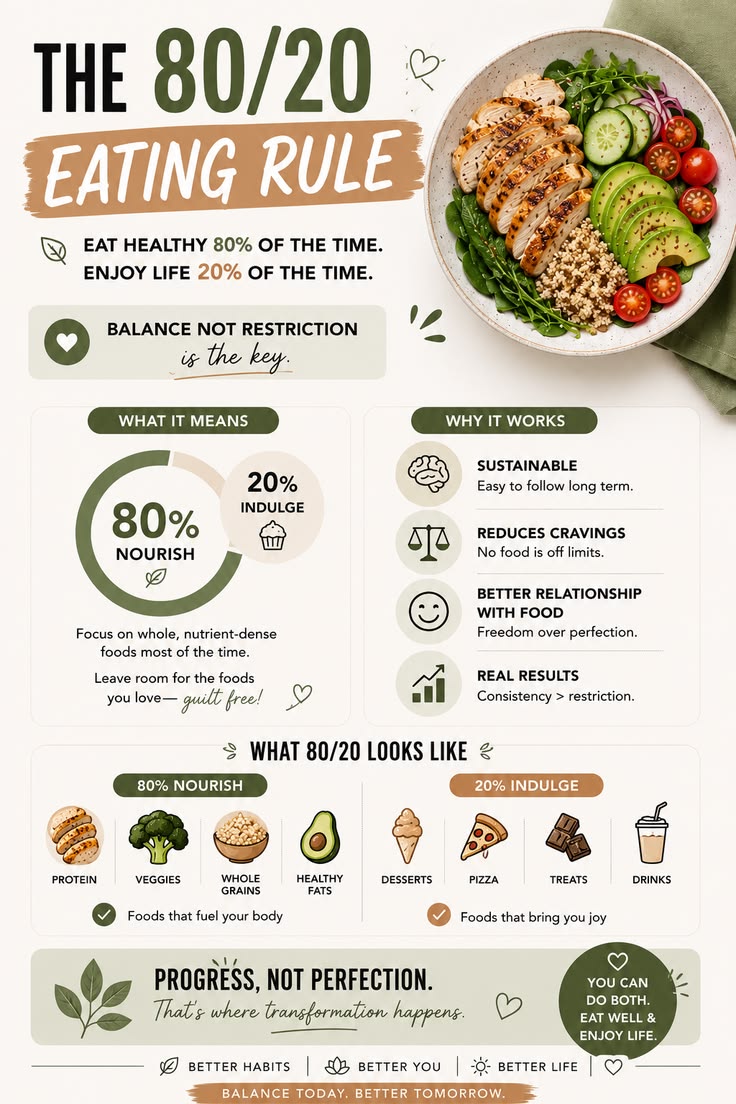
The idea is to make nutritious, wholesome choices most of the time—around 80% of the time—while allowing some flexibility for the remaining 20%.
The numbers don't need to be calculated precisely. It is not a mathematical diet plan. Instead, it encourages a healthier relationship with food where nutritious choices are the foundation, but occasional treats are also allowed.
For example, most of your meals might include vegetables, fruits, whole grains, pulses, dairy or other protein sources, nuts, and healthy fats. Occasionally, you might enjoy your favourite dessert, restaurant meal, festive food, or snack without feeling guilty.
Why Doesn't Perfect Eating Work for Everyone?
Trying to eat perfectly can make healthy eating unnecessarily stressful.
Birthdays, festivals, weddings, travel, family gatherings, work events, and simple cravings are all part of real life. Expecting yourself to follow a perfect diet through every situation can lead to an unhealthy cycle:
restriction → craving → overeating → guilt → restriction again
A flexible approach can help break this cycle.
Instead of thinking, “I ate something unhealthy, so my diet is ruined,” you can think:
“One meal doesn't define my overall eating pattern.”
That small change in mindset can make healthy eating much more sustainable.
What Does 80% Healthy Eating Look Like?
It doesn't mean every meal needs to be perfect.
It can simply mean:
Choosing home-cooked meals more often
Including vegetables and fruits regularly
Getting enough protein and fibre
Drinking enough water
Choosing whole or minimally processed foods more often
Being mindful of portion sizes
Limiting highly processed foods rather than completely banning them
And the remaining 20%?
It could be your favourite dessert, a pizza night, a festive meal, or simply a day when your food choices aren't as structured.
The goal is balance, not perfection.
The 20% Isn't a “Cheat”
One important point: food doesn't need to be labelled as “good” or “bad.”
Calling certain foods “cheat foods” can create guilt around eating them.
Instead, think of them as foods that may be eaten less frequently or in smaller amounts, while nutritious foods make up the majority of your diet.
Enjoying a favourite food occasionally does not cancel out your healthy habits.
In fact, allowing flexibility may make it easier to maintain those habits in the long term.
But Is 80/20 Suitable for Everyone?
The 80/20 approach is a general framework, not a universal prescription.
People with specific medical conditions, food allergies, eating disorders, or particular nutritional requirements may need a more individualized approach from a qualified healthcare or nutrition professional.
Similarly, your nutritional needs can change depending on your age, activity level, lifestyle, and health goals.
That's why nutrition should not be about blindly following a percentage or a trending diet rule.
The Bigger Picture
Healthy eating is not about having one perfect day of eating.
It is about what you do consistently over weeks, months, and years.
If most of your choices support your health, an occasional indulgence is unlikely to undo your progress.
So, instead of asking:
“Did I eat perfectly today?”
Try asking:
“Are my overall eating habits supporting my health?”
That question is more realistic—and much more useful.
Final Thought
You don't need a perfect diet to build a healthy lifestyle.
You need consistency, variety, balance, and flexibility.
The 80/20 approach is simply a reminder that healthy eating should fit into your life—not make your life revolve around food rules.
Because nutrition isn't about being perfect. It's about making better choices, most of the time, in a way you can actually sustain.
Want a plan built for your body?
Book a consultation with a certified NutriClench dietitian.
Book a ConsultationKeep reading
What Does a Healthy Diet Really Look Like in 2026? A Practical Guide to Balanced Eating
Discover what a healthy diet really means in 2026—a practical balance of whole foods, essential nutrients, mindful portions, hydration, and sustainable eating habits. This guide simplifies modern nutrition science into everyday choices, helping you build balanced meals, support long-term health, and develop realistic habits without restrictive diets or unnecessary food rules.
Read more Nutrition & WellnessHow Much Water Do You Really Need? A Practical Guide to Daily Hydration
How much water should you drink every day? Learn how hydration needs vary, common signs of dehydration, the best ways to stay hydrated, and when you may need personalized nutrition guidance.
Read more Nutrition & WellnessEating for Energy: Foods that Boost Stamina
Do you often feel exhausted even after eating enough calories? The answer may not be how much you eat, but what, when, and how you eat. While calorie intake provides fuel, the quality of your food determines how efficiently your body produces and sustains energy. Nutrient-rich foods such as eggs, beans, oats, bananas, nuts, seeds, chicken, and chickpeas deliver a balanced combination of protein, complex carbohydrates, healthy fats, vitamins, and minerals that help maintain steady energy levels throughout the day. Discover how making smarter food choices can reduce fatigue, improve metabolism, and keep you energized from morning to night.
Read more